
When you’re next in Belfast and have a spare day, do yourself a favour and take a coach tour to the Giant’sCauseway.
For around £24, courtesy of the GetYourGuide app, I booked a seat, leaving at 8.30 am from outside Belfast City Hall.
From the outset, the entertainment began, delivered by our driver, Dave. Dave introduced himself along with a few one-liners. He followed that with a disclaimer that nobody should be offended by anything he said! It’s just the ‘craic’!
Dave was a multitasking genius in my mind. This guy could drive a coach on narrow, winding roads while commentating on the sights as we passed, telling jokes and stories, cueing songs and videos, all simultaneously.
Our trip headed along the Antrim Coast Road (A2). This stretch of the road mainly hugs the coastline for some 26 miles and offers stunning views across the sea. The Mull of Kintyre in Scotland is clearly visible, as it is only 12 miles across the Irish Sea at its closest point.

Our tour included several stops and sites en route to the causeway. The first of which was Carrickfergus Castle. Carrickfergus is the oldest town in County Antrim on the north shore of Belfast Lough, 11 miles northeast of Belfast.

Built in 1177, Carrickfergus Castle is a magnificent medieval wonder. The castle still dominates the local landscape, and the harbour below provides a picturesque backdrop. Today, it houses amazing historical exhibitions and a collection of cannons from the 17th to the 19th century.
I bought a ticket for around £4, and visitors can explore the site on their own, climbing to the top of the keep, walking the walls, and admiring the views over the lough between the crenels.

Several rooms within the castle are open to the public, including the banquet hall, vaults and constable’s quarters. Some of the rooms feature life-like props that are often decorated in line with the season.
Next on our tour was a brief cliff-top overlooking the famous Carrick-a-Rede Rope Bridge, which we could only just see below us. We could make out a few hardy people crossing the bridge while buffeted by the strong winds.
Sadly, the National Trust don’t allow coach parties to access their facilities due to staff shortages and safety concerns.
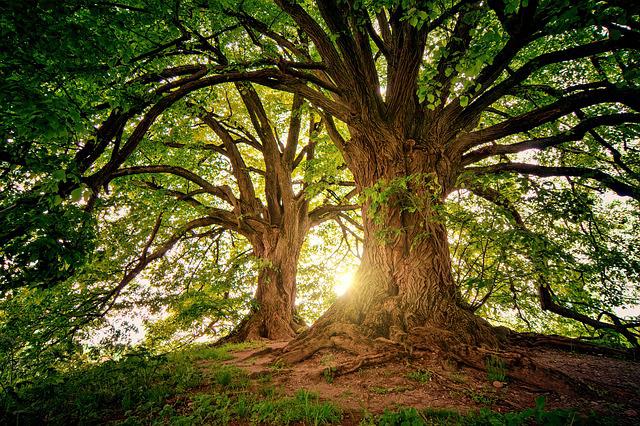
We moved on to visit the Dark Hedges. The Dark Hedges consist of mature European beech trees growing on either side of a straight, 300-metre section of the Bregagh Road. Their twisted trunks and branches arch to form a dramatic and eerie, shaded natural tunnel.

The trees date back to around 1775 and were planted by the Stuart family as a landscape feature leading to their Georgian mansion, Gracehill House, in County Antrim, Northern Ireland.
In recent years, the Dark Hedges have been visited by fans of Game of Thrones. Much of the filming for the TV series took place in Northern Ireland, and this location was used as the King’s Road.
The nearby Hedges Hotel and The Pantry provided everyone with the opportunity to enjoy a hot lunch and have plenty of time to walk the iconic road.
Refuelled by my jacket potato from The Pantry, I got back on the coach as we headed to the next stop: Dunluce Castle.
The castle features medieval and 16th-to-17th-century ruins perched on a dramatic basalt cliff overlooking the Atlantic Ocean.

By the time we reached the castle, the weather had turned stormy, so our visit was brief, which gave us more time at the Giant’s Causeway.
On reaching the Causeway, Dave advised us that we didn’t need to enter the National Trust Visitor Centre and pay £16 per adult to visit the causeway, as access is free for everyone.
The Giant’s Causeway is a UNESCO World Heritage Site and is located about one mile from the Visitor Centre. You have route options to reach it. They are colour-coded blue, green, yellow and red. Each path varies in difficulty, accessibility and time to reach the Causeway. The blue route is the quickest and most direct, taking about 25 minutes; the others approach the Causeway via a path along the clifftop before heading down to the sea.

I took the red route, which leads east along the cliff before a winding, steep descent, then back towards the Causeway. This route takes about an hour and offers panoramic views of the beautiful and rugged coastline.
So I finally reached the day’s highlight, and the adverse weather seemed in keeping with the location, only adding to its spectacular charm with its hexagonal stepping stones.

The Giant’s Causeway stones are this shape because of column jointing, a natural cooling and contracting process that occurs when thick molten basalt lava solidifies, and erosion has exposed it as we see it today. It was formed nearly 60 million years ago as Europe began separating from North America, creating around 40000 interlocking columns.

There are actually three Causeways:
The Little Causeway is the first part you’ll reach if taking the blue route. It has a series of basalt columns that are low in elevation. It is well-known for the “Wishing Chair,” a naturally occurring stone structure that resembles a throne where guests customarily sit and make wishes.
The Middle Causeway, also known as “The Honeycomb,” is easily identifiable due to its densely packed, uniform hexagonal patterns that resemble a huge stone beehive or honeycomb.
The Grand Causeway is the largest and most famous section, containing the bulk of the 40,000 columns. The rocks here form natural stepping stones that dramatically climb up the cliff face and then descend straight down into the crashing sea, giving the distinct impression of a road built by giants.

Gingerly, I explored the slippery, wet stones, which were challenging to climb in places. Guides were present to assist visitors and keep everyone safe.

Despite being soaked to the skin, I wanted to explore every ridge and natural pathway through and around the stones and fully absorb this unique experience.

I took the direct blue route back up the cliff. The wind was in my face now, and so gusty that it blew me backwards in places.
If your visit is equally challenging due to the weather, there are two places, other than the Visitor Centre Cafe, where you can take sanctuary for a hot drink or something to eat. They are The Causeway Hotel, with an excellent restaurant, or The Nook Cafe, which was lovely and cosy, with an open fireplace.
Then, back on the coach, we took the direct route to Belfast and arrived around 5.30 pm.
The end of a very soggy but unforgettable day!
Take The Train From Belfast To Derry



Leave a Reply